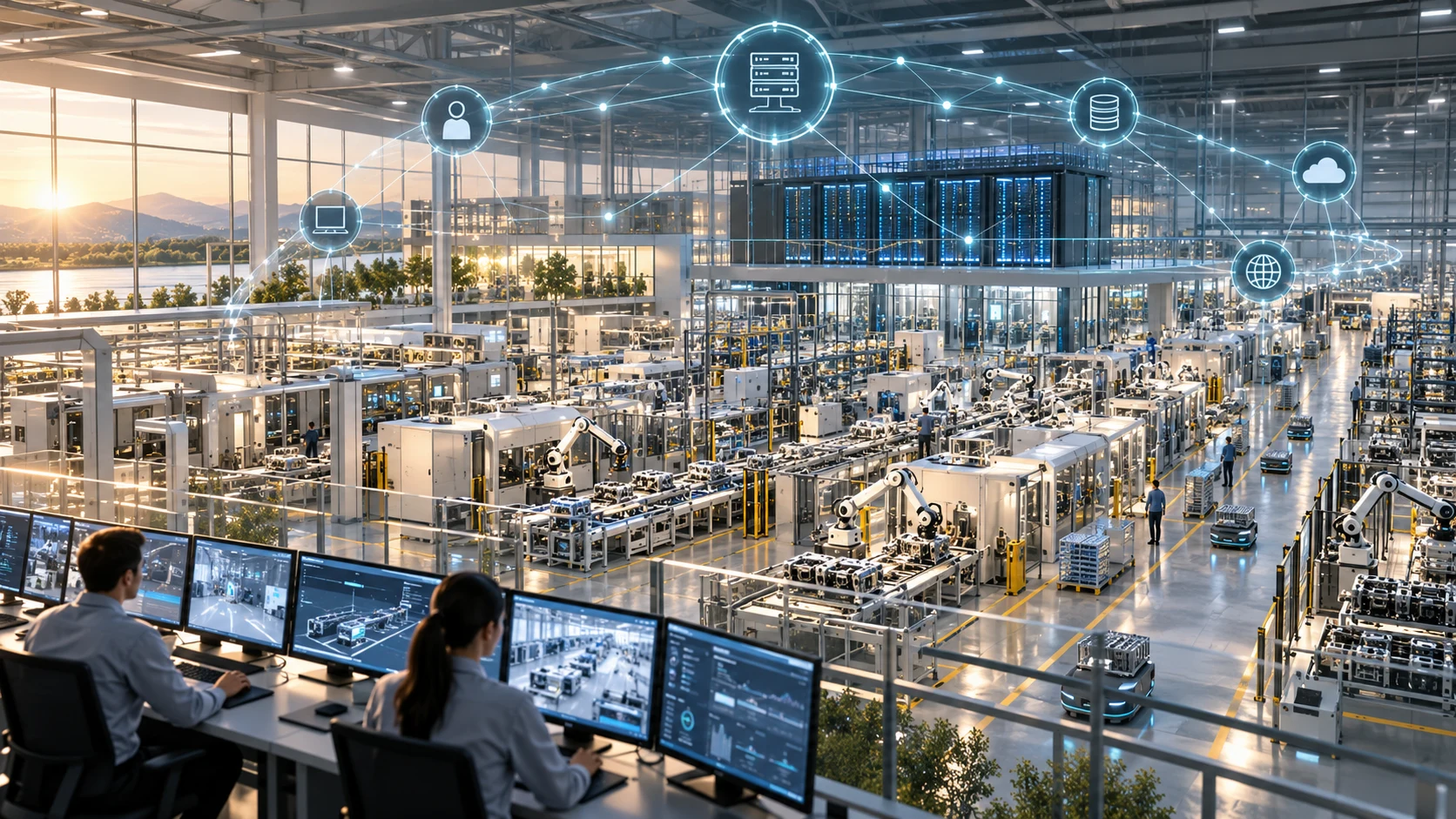
Production Continuity and Security Architecture
In high-capacity manufacturing facilities, sustainable technology infrastructure directly supports uninterrupted production. When designing these environments, I made sustained system performance and continuous 24/7 production fundamental design criteria. Through the infrastructure I designed and the implementation processes I led, I ensured this operational continuity.
I designed cybersecurity architecture alongside production continuity and system performance requirements. I considered how users, devices, applications and data would be protected, and how access would be governed, as part of the infrastructure decisions. I led the implementation of security controls suited to the operating conditions of manufacturing environments.
As manufacturing facilities, head offices and multi-site operations expanded, consistent security standards and centralized management became essential. I designed identity management, network access, privileged accounts, endpoint security, data protection and external threat visibility within a shared enterprise architecture and led their implementation.
My objective was a security environment that supported production continuity and performance, defined access rules, made critical activities traceable and risks visible, and could scale with the business.
Identity and Access Standards
I positioned user identities and access rights as the starting point of the enterprise security model. My objectives were to align access with organizational roles and responsibilities, standardize permissions and centrally control the user lifecycle.
I positioned Identity Management (IDM) as a core component of enterprise access management, creating a shared framework connecting account and permission management with organizational needs.
I extended this approach to network access. Through Network Access Control (NAC), I enabled identification of users and devices connecting to the corporate network and centralized application of access policies. I ensured that access needs across manufacturing facilities, head offices and operational areas were managed under common security standards.
Critical Systems and Privileged Access
I treated highly privileged accounts on servers, databases and network infrastructure as a dedicated control area in the management of critical systems.
I positioned Privileged Access Management (PAM) around centralized management of privileged access, control of access to critical systems and traceability of activities, and led its implementation.
This architectural decision established a management framework linking privileged account use to enterprise security policies. I considered access control and accountability together when governing critical systems.
Endpoint Security and Incident Visibility
I designed user device and server security as a key component of centralized security management, considering protection, threat detection and incident visibility together.
With Cortex XDR, I aimed to enable centralized monitoring of endpoint security events, earlier threat detection and evaluation of relationships between incidents. I led implementation with the objective of supporting more effective incident response.
Protection Based on Data Sensitivity
I based the data security approach on identifying the sensitivity of enterprise data. Defining the protection level required for each type of data was a prerequisite for its use and sharing rules.
I led the establishment of data classification with Boldon James. I supported this structure with Data Loss Prevention (DLP) policies to control the use, sharing and transfer of sensitive data outside the organization according to defined rules.
I considered data protection throughout its lifecycle, from use to sharing.
External Threat and Digital Risk Visibility
I included the organization’s internet-facing digital assets and externally emerging threats within the scope of the security architecture.
I incorporated external threat and digital risk visibility through Brandefense into the centralized security approach. Visibility into potential data leaks and external risks was intended to support earlier risk assessment and help security teams prioritize their response.
Online Market Payment Systems and PCI DSS
I treated payment system security in the online market operation as part of the enterprise cybersecurity architecture. I considered PCI DSS requirements as security criteria guiding the design and operation of the online payment infrastructure.
I aimed to manage payment-related access controls, system security, network structures and operational processes in line with these requirements. I connected the online market’s payment security needs with enterprise security standards and led the implementation processes.
Shared Architecture and Governance
I centered the project’s governance approach on managing different security areas under common rules. I evaluated decisions concerning identity, access, privileged accounts, endpoints, data and external threats within the same enterprise framework.
I established centralized management, access control, traceability and risk visibility as shared design principles. I considered local operational requirements while aiming for consistent and sustainable security practices.
This approach established a foundation for addressing the security needs of new facilities and expanding operations in line with enterprise standards.
Outcome
I treated cybersecurity as an enterprise responsibility spanning the design and operation of technology infrastructure. I sustained the performance of systems operating 24/7 in high-capacity manufacturing facilities and ensured uninterrupted production, implementing the security architecture alongside these operational requirements.
The architecture I designed and whose implementation I led supported the management of identities, devices, critical accounts and data under common standards. I brought access control, security incident visibility and data protection together within one management approach.
The project’s central value was a centrally manageable and sustainable technology environment that preserved production continuity and supported secure growth across manufacturing facilities, head offices, multi-site operations and the online market.